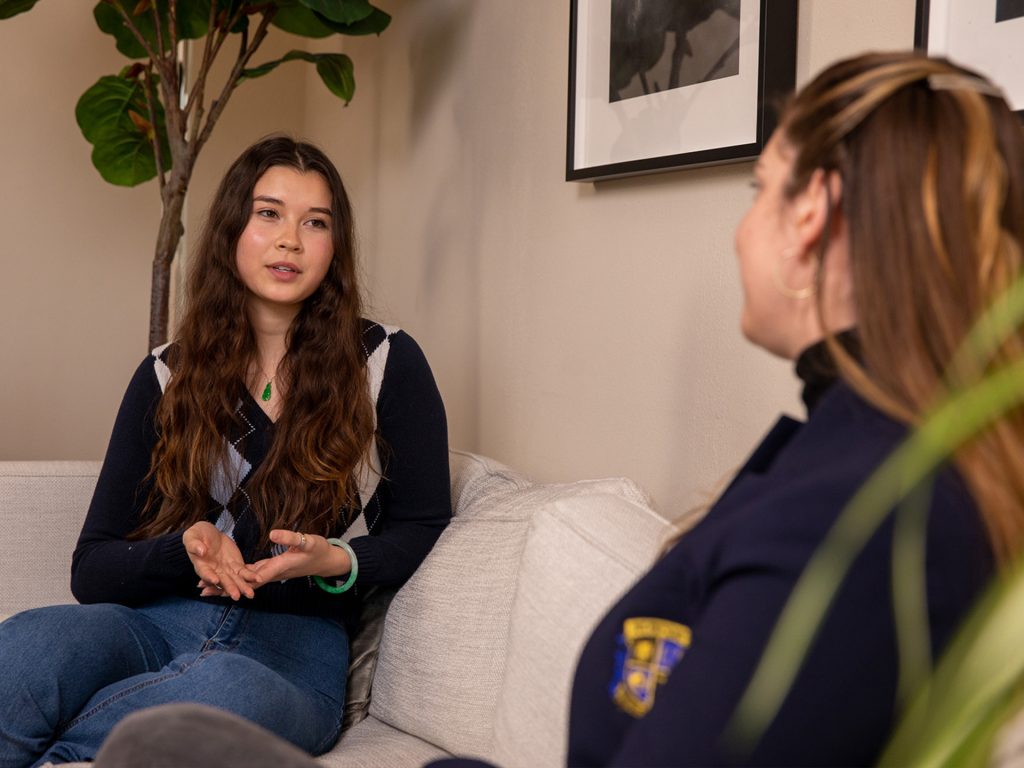


More young adults are living at home with their parents than ever before. Economic factors such as inflated housing costs and a volatile job market are generally to blame, with financial problems also causing many adults under 35 to postpone marriage, family life, and fully independent living.
As these adults under 35 live with mom and dad, the parent-child dynamic changes. Setting limits with an independent adult child is very different than creating consequences for a dependent teenager. For parents facing conflict, stalled independence, mental health concerns, or questions about whether a true “failure to launch” has occurred, understanding these differences is critical to family harmony and to helping young adults thrive.
To parent young adults well, parents need to set clear boundaries, build a relationship based on mutual respect, encourage independence and responsibility, and know when support starts to become enabling. In this article, we share more about what healthy versus unhealthy adult child behavior looks like, how to communicate and set boundaries effectively, and when professional help may be needed to get your young adult child successfully to their next chapter.
Quick Read
More young adults are living with their parents than ever before, largely due to economic challenges like rising housing costs and a fluctuating job market. As of 2025, over 25 million adults under 35 reside at home, a trend that has intensified since the COVID-19 pandemic. This living arrangement often alters the parent-child dynamic, requiring parents to set clear boundaries while fostering independence and responsibility in their adult children.
To support young adults effectively, parents should recognize signs of healthy versus unhealthy behaviors. Healthy indicators include budgeting, contributing to household tasks, and maintaining social connections. In contrast, signs of a “failure to launch” may involve dependency on parents, lack of employment efforts, and neglect of personal care. Open communication, mutual respect, and professional help when needed are essential for navigating this complex relationship and ensuring young adults can thrive independently.
Why Are More Young Adults Living with Their Parents?
Based on Census data, Realtor.com reported that over 25 million young adults under 35 were living with their parents as of 2025. This means that roughly one in three have chosen to remain in their family residence, which is an all-time high, surpassing the number who lived with parents during the COVID-19 pandemic.
The economic climate has seen volatility in the aftermath of COVID, especially with regard to housing costs. Job concerns are real, specifically with the advent of AI; however, seven out of 10 young adults between 24-35 reported that they were employed, which indicates that housing costs are a primary issue. Median home pricing is nearly 35 percent higher than it was in 2019, and median pricing for rent is nearly 18 percent higher.
Financial uncertainty and a lack of strong community ties might be causing young adults to postpone marriage, which would typically helps them combine incomes to buy a home. Technology has brought both opportunities and limitations; young adults can live anywhere, change jobs more easily, and connect online—but these conveniences have impaired in-person interactions, created social churn, increased rates of transition, and fostered more sustained isolation in young adults. Finding a partner or even a group of friends has been more challenging for the under 35 age group. Living with parents, then, provides both a sense of connection and security.
When Does an Adult Child Need Professional Help?
If the odds have been stacked against young adults in recent years, it makes sense that many are living at home to save money and gain stability for the time being, until they can afford to operate more independently. However, families can fall into old patterns of caretaking that may hamper a young adult’s eventual transition out of the home. Young adulthood is full of ups and downs, but how can parents determine whether a child is being helped in a healthy way or enabled in a negative way? What are the signs that an adult child has truly “failed to launch”?
Signs of a Young Adult on a Healthy Trajectory
The ideal arrangement in the family home should be mutually beneficial but also continually focused on the young adult’s preparation for independent living. Young adults who are building their responsibility are likely to exhibit the following signs:
- Creating and/or maintaining a budget
- Wanting to pay for things or contribute through service (lawn care, cleaning, etc.)
- Taking care of their things and being respectful of yours
- Working regular hours or actively seeking a job
- Seeing friends or seeking to make friends (social activities outside the house)
- Being conscious and respectful of your rules
- Maintaining their appearance and hygiene
- Keeping a consistent schedule and getting enough sleep
Young adults will occasionally run aground of your rules. For instance, their standard of “clean” may be different from yours and it’s something worth talking through. They may get depressed or reclusive if they’re experiencing challenges, but those moods should be temporary. They may not know how to manage their money or maintain their things. These are items you can help them learn how to do (but not do for them).
Signs of a Young Adult Who Has Failed to Launch
Some young adults may move back in with their parents as a result of financial, health, housing, or personal issues, but there are signs when the relationship is moving more toward dependence than independence.
Here are some indications that a young adult has or is failing to launch:
- Selling a car without planning to buy another one (their solution is to borrow your car indefinitely)
- Not creating or maintaining a budget
- Not offering to pay for anything or help out around the house
- Shrugging off work responsibilities or not trying to find employment
- Spending a majority of time isolated (few to no social activities outside the house)
- Spending a majority of time online (playing video games, scrolling social media, etc.)
- Not planning to move out or avoiding conversations about moving out
- Not maintaining appearance or hygiene
- Ignoring your rules and/or not respecting your requests
- Not taking care of your things or their own
- Relying on you for all or the majority of their food, money, or maintenance needs
- Frequently needing to be “rescued” emotionally or financially
If your child has unrealistic ideas about their work and what their life should be like—or is only focused on the short-term (no planning for the future)—they may need you or a counselor to help them acknowledge reality and take healthy action steps. They may have become tangled in the safety net that you’re providing.
Signs of Mental Health Struggles
Your adult child may also be experiencing mental health struggles. If your child is showing the following signs, it’s time to get a treatment professional involved:
- Depressed mood that remains for over two weeks and intensifies
- Frequent crying, outbursts, or resistance to getting out of bed or out of the house
- New or increased substance use
- Obsessive worrying about their situation or the future
- Anxiety or panic attacks
- Chronic fatigue, insomnia, or other sleep problems
- Changes in appetite
- Apathy toward relationships, work, or former interests
- Delusions or visions of grandeur
- Lying, stealing, or manipulative behavior
- Violence or threats of violence
- Fits of rage or abusive behavior
- Thoughts of suicide
If your young adult child has talked about or contemplated suicide, call the Suicide Helpline at 988 immediately. They will have resources to help your child receive treatment and hopefully regain their clarity and sense of self. If your child is dealing with other mental health symptoms, get in touch with treatment professionals who can provide critical assistance to help them thrive again.

How to Live with Young Adult Children
Young adults are living their own lives, and this can create challenges when they’re living under your roof but not necessarily under your authority. Negotiation, support, respect, and clear boundary setting can be very useful in achieving a workable dynamic.
Setting Boundaries with Adult Kids
The best way to set the stage with a young adult child is to foster an environment of mutual respect. Many parents feel guilt when they start setting boundaries, but clear limits support healthy relationships. You respect their independence and way of life, and you want them to respect yours. Your goal is to meet in the middle on issues of conflict. Here are some tips:
- Have a conversation about what’s important to you, and ask what’s important to them so you can set clear expectations
- Put household rules, timelines, and responsibilities in writing to prevent confusion
- Make it clear that you want to be helpful but that you want them to be independent and responsible—and what that means specifically
- Use “please” and “thank you,” like you would with any other adult
- Tell them what you’d like them to pay for and what you’re willing to help with
- Express your desire to help them learn how to do things (like budgeting, car maintenance, tax preparation) without giving unsolicited advice or doing them for them
- Listen to their fears and needs and have regular conversations about planning for the future, engaging together on solutions without trying to rescue them from their problems
Conversation Scripts for an Adult Child
Here are some scripts to use with a young adult child who is living with you:
A boundary is crossed
“Hey, let’s revisit the conversation that we had about X. Can you tell me more about what happened here?” Be kind and use active listening by focusing entirely on what your young adult is saying before you respond, but don’t neglect to enforce the boundary. You can make adjustments if the boundary is unrealistic or hard to enforce; the goal is not to give up on having clear boundaries, because that will be better for both you and your child.
Rules or requests are being ignored
“Remember how I said that Y was important to me? If it happens again, we’ll have to find another solution. I want to be able to trust you with this.”
Moving out is not a priority
“Let’s talk about your plans for the next X months and our expectations for that time, because we have plans, too. We want to help you, but we want you to move toward living independently, so let’s figure out together how to make that happen.”
They don’t take responsibility
“I can help you learn how to do this, but I’m not going to do it for you. Tell me if you want my help or not.”
They are neglecting hygiene
“Tell me why you’re not doing X. If there’s something bothering you, I’m here to listen.” If they say there’s nothing bothering them: “Well, I’m noticing X, Y, and Z, I want you to have a healthy lifestyle. So why are you making these choices?”
Some of these talks may feel overwhelming, and difficult conversations often go better when everyone stays calm and respectful.
The Reverse Caretaking Dynamic
There are times when a young adult child is fairly responsible and ends up supporting many of the needs of the household, especially as parents get older; as children grow, family roles can shift in ways that blur responsibility. A more dependent relationship may form because the parents need a caretaker, so they may resist launching the child because they fear losing needed help or feel guilt about pushing for more independence when a young adult is carrying part of the household load.
Parents should consider how this might impact the livelihood of the young adult, their financial status, and their formation of a family. Sometimes support from a child is actually needed, but it can also be supplemented with other means. It’s worth considering if a reverse caretaking dynamic is entirely healthy between the child and the parents.
Treatment Options for Young Adults Who Are Struggling
At Newport Institute, Newport’s treatment program for young adults ages 18–35, we understand the unique needs of today’s emerging adults. Whether your child is dealing with mental health issues or substance use, we identify root causes and deliver personalized treatment for long-term healing.
Therapy can provide a safe space for young adults to process stress and for families to navigate difficult conversations more productively. Young adults can get expert guidance from treatment professionals, practice self-care, build practical life skills, connect with peers, and find a positive direction in life. If your young adult is struggling with life-disrupting issues, get in touch with our team today and find out how we can help.
Sources
- Realtor.com census report, June 2026
Frequently Asked Questions
The best way to set the stage with a young adult child is to foster an environment of mutual respect. You respect their independence and way of life, and you want them to respect yours. Setting and enforcing clear boundaries is important, and your goal is to meet in the middle on issues of conflict.
Your child may have unrealistic ideas about their work and what their life should be like — and they may also only be focused on the short-term (no planning for the future). They may need you or a counselor to help them acknowledge reality and take healthy action steps. If they’re used to you or someone else taking care of them, they can get tangled in the safety net that you’re providing.
Discuss what matters to both of you, emphasizing your desire to help while encouraging their independence. Use polite language, specify what expenses they should cover and what you’ll assist with, and express your intention to teach them skills like budgeting and car maintenance without doing it for them.
Listen to your child’s fears and needs and have regular conversations about planning for the future, engaging together on solutions without trying to rescue them from their problems.
When your child says they have no plans to move out, say, “Let’s discuss your plans for the next few months because we have our own plans. We want to help you, but we also want you to work toward independence.” If they avoid responsibility, respond with, “I can help you learn this, but I won’t do it for you. Let me know if you want my help.” Also, be sure to let them face the consequences of their choices while offering guidance without rescuing them.
A poor boundary is unrealistic or unenforced. You may set such boundaries initially, but you can adjust them later. Once you identify what’s realistic and enforceable, stick to your boundaries. For instance, if you say your child can only eat the groceries they buy, it can be confusing if all the food is mixed together. Instead, consider having them contribute to the grocery bill, store their food separately, or take responsibility for their own dinner while still sharing lunch or snacks with you.
The ideal arrangement in the family home should be mutually beneficial but also continually focused on the young adult’s preparation for independent living. Negotiation, support, respect, and clear boundary setting can be very useful in achieving a workable dynamic.