
Depression Treatment for
Teens & Young Adults

How Depression Is Treated at Newport Healthcare
In our programs for teens, children, and young adults, depression is treated through integrated, multidisciplinary care that looks at the whole person, not just their symptoms. Our team of clinical and medical professionals works together to address underlying factors such as trauma, stress, relationships, physical health, and co-occurring conditions.
Treatment may include evidence-based therapy, medication, and experiential modalities like art, music, movement, mindfulness, and outdoor activities. Together, these approaches help young people develop healthy coping skills, build resilience, and create lasting change—supporting the to move into a bright, empowered future.
Levels of Care for Depression
The right treatment for depression depends on the severity of a depression diagnosis. In many cases, young people may need more than one level of care as they navigate the healing journey.
For example, an acute episode of major depression may require inpatient care, followed by residential treatment and then outpatient program. Treatment choices should also take into account whether a patient has a co-occurring issue, such as anxiety or a substance use disorder, in addition to depression.
Levels of care for depression include:
- Inpatient hospitalization: Inpatient care provides 24/7 medical supervision and stabilization for people experiencing severe depression or an immediate safety risk.
- Residential treatment: Residential care offers a supportive, live-in environment where young people can step away from daily stressors and focus fully on healing.
- Partial Hospitalization Program (PHP): A PHP provides structured treatment for several hours a day while allowing clients to return home in the evenings.
- Intensive Outpatient Program (IOP): An IOP offers focused therapy and support on a flexible schedule so clients can continue attending school or work and managing daily responsibilities.
A whole-person approach to healing
What Our Depression Treatment Includes

Psychiatric and Clinical Care
- Psychiatric care, medication recommendations, and ongoing medication management
- Cognitive Behavioral Therapy to helps clients reframe negative patterns of thinking
- Dialectical Behavioral Therapy to build distress tolerance around depression
- Attachment-Based Family Therapy to rebuild disrupted family relationships so young people can rely on their parents and other loved ones for support
- EMDR to heal from underlying trauma that may be contributing to depression

Experiential
Modalities
- Mindfulness and meditation to help balance the nervous system, including yoga and reflection exercises
- Creative art therapies, including music therapy and art therapy, to enhance self-expression and process trauma underlying depression
- Adventure therapy to empower young people to handle challenges and master new skills
- Community service, as doing good for others is proven to increase life satisfaction and well-being

Academic, Career, and Life Skills Support
- Accredited academic component for teens, and assistance with college applications and admission
- Support with career planning, resume building, and planning next steps
- Life skills training, including daily skills for independent living
- Executive functioning support, to enhance emotional regulation, organization skills, and self-awareness
How Teen and Young Adult Depression Treatment Differ
The biggest difference between teen treatment vs. young adult treatment is the developmental stage each program is designed to support. Teen depression treatment focuses on strengthening the parent-child relationship, improving family communication, and helping adolescents build emotional regulation and coping skills. Because school is a major part of a teen’s life, treatment may also include academic support to help them stay engaged and prepare to return to the classroom.
Young adult depression treatment puts more emphasis on independence and the transition into adult life. Along with clinical and experiential therapy, care may include life-skills training, executive functioning support, career development, and academic planning. Family therapy can still play an important role, but the focus shifts toward helping young adults maintain supportive relationships while developing autonomy, purpose, and confidence.
Our Depression Treatment Outcomes
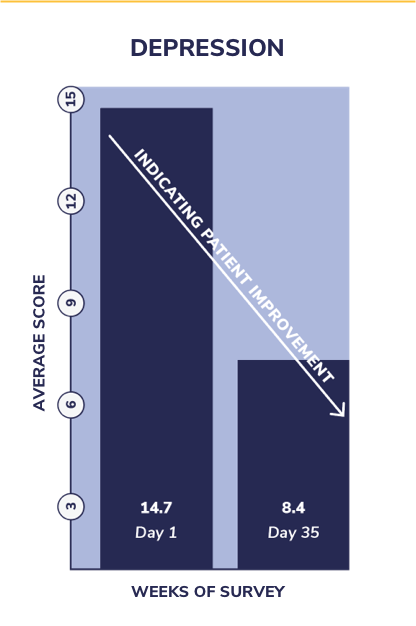
Most young people who come to Newport have a depression diagnosis, often accompanied by a secondary diagnosis of anxiety or another co-occurring issue. We track their improvement over time using the PHQ-9, a standard assessment tool for depression.
In year after year of tracking our outcomes, we’ve seen that our patients’ depression scores drop from severe/moderate levels to moderate or mild after just a few weeks of treatment. Young people in our care report feeling increasingly relaxed, happier, and more engaged in everyday life.
We also assess suicide risk by surveying patients on their suicidal thoughts, plans, and motivation to live. Over the course of treatment, the percentage of patients reporting these symptoms typically drops by 50 to 75 percent across all age groups and in both levels of care.
Types of Depression
There are various types of depressive disorders. Here are some of the most common types of depression.
How to Find Out If You or a Loved One Has Depression
The first step in treating depression is getting a diagnosis. When depressive symptoms are suspected, a medical care provider will typically conduct the following exams and tests to inform a comprehensive diagnosis:

Physical Exam
The doctor may do a physical exam and ask in-depth questions about the patient’s health to determine what may be causing depression. In some cases, depression may be linked to an underlying physical health problem.

Lab Tests
A doctor may conduct a blood test called a complete blood count, or test thyroid function to ensure that it’s working properly, to rule out medical issues that might cause depression.

Psychological Evaluation
A doctor or mental health professional may inquire about your thoughts, feelings, and behavior, or give you a questionnaire to fill out. Your answers help pinpoint a diagnosis.

When to Get Help for Depression
If depression signs and symptoms begin to interfere in your life or the life of someone you care about, talk to a doctor or a mental health professional. Your family doctor may be a good place to start.
Symptoms of severe depression in children, teens, and young adults likely won’t get better on their own—and they may get worse or lead to other problems if untreated. Depression creates a risk of suicide, even if the signs of depression don’t appear to be severe.
Signs & Symptoms of Depression
Here are the most common symptoms that indicate you or your loved one may be struggling with depression:
- Suicidal ideation: frequent thoughts of death, dying or suicide
- Feelings of sadness, which can include crying spells for no apparent reason
- Frustration, irritability, or anger, even over small matters
- Feeling hopeless or emptiness
- Loss of interest or pleasure in usual activities
- Conflict with or withdrawal from family and friends
- Low self-esteem, feelings of worthlessness or guilt
- Fixation on failures or exaggerated self-blame or self-criticism
- Extreme sensitivity to rejection or failure
- Trouble thinking, concentrating, making decisions and remembering things
- Ongoing sense that life and the future are grim and bleak

Take a Quiz
If you’re experiencing symptoms of depression, or observing signs in a loved one, take our quiz and get recommendations and next steps.
What Causes Depression?
Depression can be caused by a myriad of issues. These include:
Early childhood trauma
Traumatic events during childhood, such as physical or emotional abuse or loss of a parent, may cause changes in the brain that make a person more susceptible to depression.
Brain chemistry
Neurotransmitters are naturally occurring brain chemicals that carry signals to other parts of your brain and body. When these chemicals are impaired or out of balance, the function of nerve receptors and nerve systems changes, leading to depression.
Learned patterns of negative thinking
Depression in young people may be linked to learning to feel helpless and lost, rather than learning that they have the ability to find solutions for life’s challenges.
Hormones
Changes in the body’s balance of hormones may be involved in causing or triggering depression.
Inherited traits
Depression is more common in people whose blood relatives—such as a parent or grandparent—also have the condition.
Are you or a loved one struggling with depression?
Get in touch today to schedule a complimentary call with one of our admissions experts and explore next steps.
When to Get Emergency Help
Depression increases the risk of suicide. If you think you or someone whom you care about may attempt suicide, call 911 or your local emergency number immediately. You can also call the National Suicide Prevention Lifeline at 988 or use its webchat at suicidepreventionlifeline.org/chat.
If a loved one or friend is in danger of attempting suicide or has made an attempt:
- Make sure someone stays with that person.
- Call 911 or your local emergency number immediately.
- Or, if you can do so safely, take the person to the nearest hospital emergency room.
- Never ignore comments or concerns about suicide. Always take action to get help.


Our Team of Experts
Newport Healthcare’s team of industry experts provides results-driven depression treatment, delivered with compassion and led by personal experience. Many of our clinical professionals at our depression treatment centers for children, teens, and young adults bring their own stories of recovery and healing to their work.
Our staff includes psychiatrists, therapists, nurses, registered dietitians, teachers, and more. The Newport Healthcare team is passionate about making a positive difference in the lives of young people and their families.

From Our
Chief Clinical Officer
Our staff’s clinical expertise is matched only by their compassion and desire to see lives changed. They offer unconditional love that supports clients’ self-worth and self-acceptance as they do the work of healing.
Barbara
Nosal
,
PhD, LMFT, LADC
Where to Find Our Depression Treatment Centers
Our depression treatment centers are located across the United States. We treat ages 7–11, 12–18, and 18–35 (depending on location) from all 50 states and abroad, providing a full continuum of care.
Newport’s residential treatment centers offer serene environments, within beautiful natural settings, where young people can find long-term healing from depression and co-occurring issues. Our outpatient programs are located in major metropolitan areas, with easy access for young people and families.
Our depression programs are located in Northern and Southern California, Connecticut, Maryland, Minnesota, Pennsylvania, Utah, Virginia, Washington State, Utah, and Wisconsin. More programs are in development in areas where youth and young adult mental health and substance use treatment are most needed.
Frequently Asked Questions
Symptoms of depression in young people can vary widely, from sadness and suicidal thoughts to behavioral symptoms like substance use, eating disorders, and anger or aggression. An assessment with a mental health professional can help determine what type of depression someone is suffering from and the best treatment option.
Young people are facing a myriad of external and internal stressors, including the negative impact of social media overuse, finding their identity, and struggles with relationships.
Residential programs for young people with depression are proven to result in effective healing and long-term recovery. The immersive approach of residential depression programs like Newport’s addresses every aspect of a young person’s well-being.
If depression in children, teens, and young adults is not treated, symptoms can become severe and debilitating, preventing everyday functioning and disrupting school, work, and relationships. Moreover, depression can lead to suicidal thoughts and suicide attempts. It is essential that young people with depression receive treatment.
Five signs of youth and young adult depression are feelings of sadness, inability to enjoy activities they used to find pleasurable, suicidal thoughts, difficulty sleeping, and self-medication with drugs and/or alcohol.