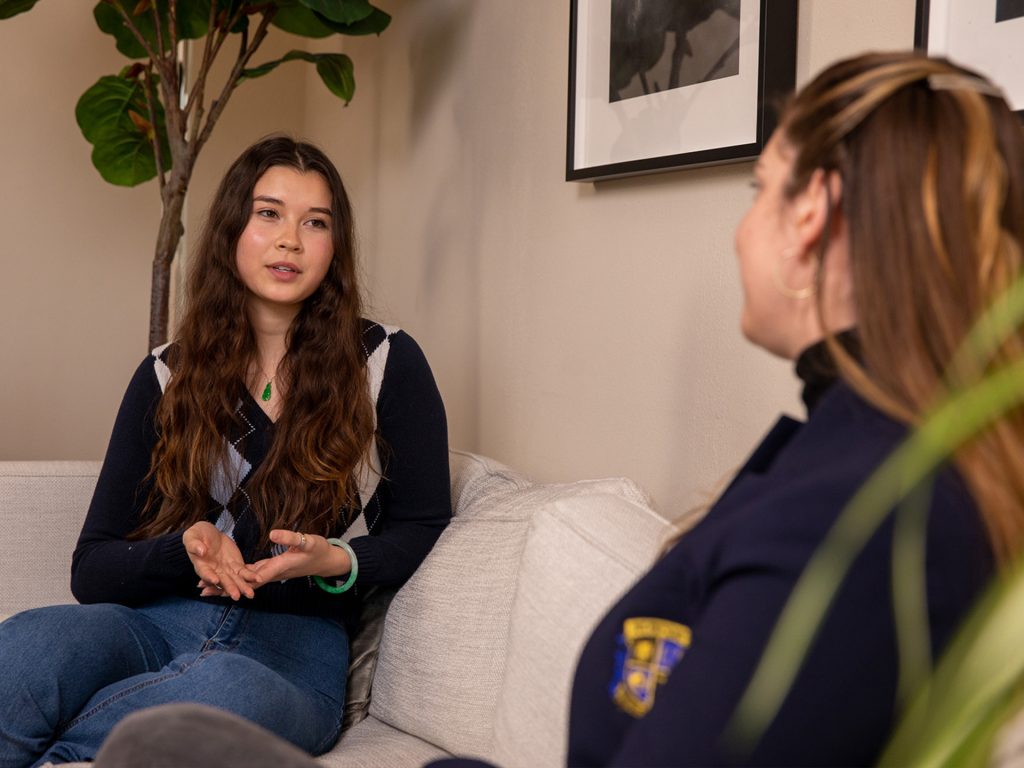



As a teenager, Landon felt alone and hopeless. It took years for him to emerge from that isolation—but now that he’s on the other side of it, he’s always willing to tell his story. He understands how shared experiences can impact others who are struggling with their mental health. It’s the power of community, he says, that propelled his recovery and continues to encourage and support him today.
‘Why Don’t I Fit in?’
Landon didn’t always prioritize community. Building and maintaining relationships with others was difficult during his teen years because he always felt like he “didn’t fit in.” At age 16, Landon came out as transgender, which received mixed reactions from those around him. Some were supportive but others were not.
Overcome by anxiety and depression, he lost interest in activities that once brought him joy.
“I was living life just to survive, but I wasn’t actually thriving,” he said. “I’ve learned though that a lot of the internalized feelings you have is because you’re not living as the person that deep down you want to be.”
National LGBTQ+ Mental Health Statistics
Sadly, LGBTQ+ young people experience mental health issues at higher rates than their heterosexual, cisgender peers and are at greater risk for suicidal thoughts and behavior.
The most recent youth survey from the Trevor Project shows that:
- 65 percent of transgender and nonbinary young people experienced anxiety and more than half reported symptoms of depression
- 36 percent of LGBTQ+ young people seriously considered attempting suicide in the past year, including 40 percent of transgender and nonbinary young people
- 1 in 10 LGBTQ+ young people attempted suicide
These statistics underscore how critical it is that young people like Landon receive the mental healthcare support they need.
Landon’s Treatment Journey
Landon spent several years in and out of psychiatric hospitals and other treatment centers. When he didn’t feel he was making progress, he decided to change course. Landon needed a place that offered 24/7 comprehensive care. Most of all, he wanted to feel like more than “just a number.” That’s when he found Newport.
A Difference From Day One
From the moment Landon walked through the doors of Newport, he felt a notable difference from his past experiences. Newport’s residential treatment centers offer home-like, comfortable environments with inviting common areas and beautiful outdoor spaces. Landon felt safe. He felt supported. And he knew he would no longer be “just a number.”
“I had therapists and nurses asking me about my interests, which seems so small, right? But they were taking the time to get to know me as a person. I was treated with such kindness and compassion and that was huge for me.”
Finding the Root Cause
As Landon settled into the therapeutic component of Newport’s residential program, which includes individual, group, and experiential therapy, he noticed something else. The care team wasn’t just treating his symptoms, they were working with him to uncover the root cause of his mental health struggles, including the trauma he’d experienced in non-gender-affirming environments.

“I’m able to see life and see that there’s a purpose. There are things that I want to do. There are ways that I want to show up for people. I think that truly is one of the greatest testaments to my experience at Newport—the way that I show up in life now.”
Landon, Newport Alumni
Building Lifelong Connections
Landon embraced all that the teen residential program had to offer, especially adventure therapy. He found that group adventures like hiking and paddleboarding brought him out of his shell and introduced him to activities he now enjoys outside of treatment.
And he started to build authentic relationships with others in the program, which became a source of mutual support that continues today. Landon stays connected with peers through Newport’s Alumni Program, which offers virtual and in-person meetups, support groups, and a secure app for messaging.
“That experience has really given me the confidence to know that I can continue to build and maintain relationships throughout my entire life,” he said.
A New Purpose
Today, Landon works in residential treatment while he works towards his Recovery SupportSpecialist Certification. He loves using his lived experience, and knowledge he gained at Newport, to connect with and encourage young people who are facing similar challenges.
“I’m able to see life and see that there’s a purpose. There are things that I want to do. There are ways that I want to show up for people. I think that truly is one of the greatest testaments to my experience at Newport—the way that I show up in life now.”

Advice to Others
If there’s one thing that Landon has learned from his experience, it’s that the path to healing is not linear. He wants others to know that it may take several tries to find the right treatment fit. There are good days and bad days—and that’s okay. “Sometimes you need a little bit more help and there’s no shame in that,” he explained.
And lastly, he emphasized that there’s no reason to struggle in isolation. Don’t be afraid, he said, to talk to a trusted adult, share with a friend, or make the call to discuss treatment options. There are always people who are ready and willing to help.
“I have a great community and support network outside of Newport. I have a chosen family that I live with, and they support me every single day. I have my relationship with my therapist and my psychiatrist. I have so many people in my corner.”
Find Community and Support at Newport
Newport understands the power of community in healing, and that core philosophy is reflected in our nationwide teen and young adult residential and outpatient programs. If you or a loved one needs additional support for anxiety, depression, PTSD, or other mental health concerns, contact us today to speak to one of our Admissions experts.