
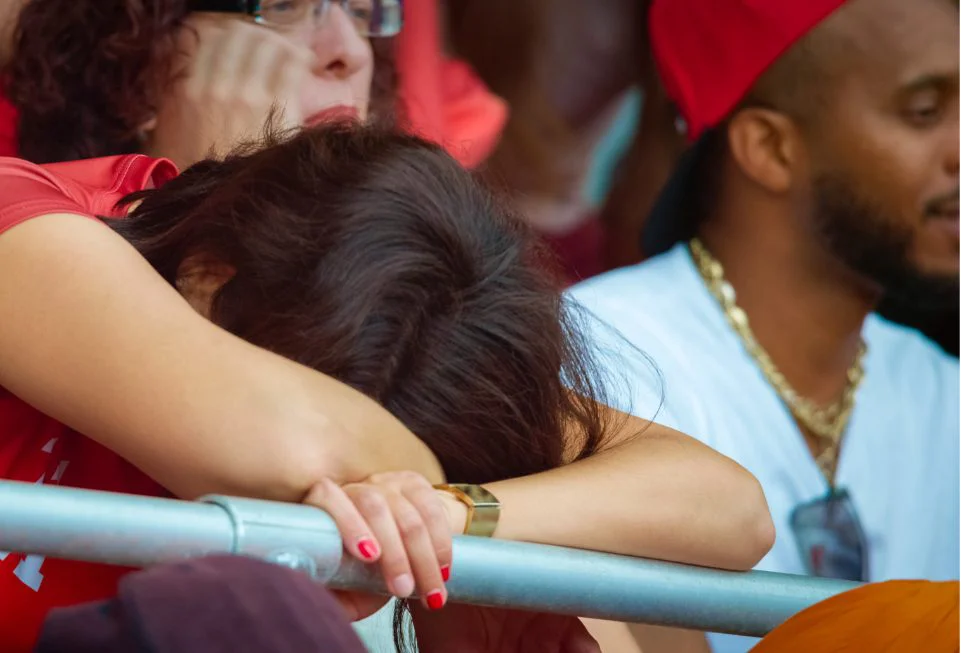


If you’re a sports fan, you know the emotional rollercoaster that comes with the hope and the grief that our favorite teams bring. The joy of victory, the agony of defeat, and the awful moments when our dreams get crushed.
A big loss can propel many fans into a type of emotional turmoil that’s known as sports fan depression. There’s also a mental state known as “sports fan letdown” that can hit you in the wake of a big win.
Learn more about these types of situational depression and how to work through them.
Quick Read
“Sports fan depression” isn’t an official diagnosis, but it’s a phrase that captures the heavy emotions many fans feel after a crushing loss or poor performance from a favorite player. For some, the disappointment can linger for days or even weeks, especially when it follows a high-stakes event like the NBA Finals or the World Cup. While the games end on the field, the emotional investment carries over into everyday life.
The frustration goes deeper than the scoreboard. Years of loyalty—time, money, and energy spent cheering for a team—can make a loss feel like a personal blow. Anger, sadness, and even grief can rise to the surface, fueled by the strong connection fans have built with their team. Add in the pride of representing your city or state, the emotional fallout can be even stronger.
Sports fans also thrive in community. Whether you’re gathered at a bar with strangers in the same jersey or on the couch with family and friends, there’s power in rooting together. That shared energy is what makes the highs exhilarating—and the lows devastating. When the season ends or the streak is broken, it’s not just about losing a game, it can feel like losing a piece of connection, too. When these challenges exist past the big game, especially over a period of time, the best thing you can do is seek professional help.
What Is Sports Fan Depression?
“Sports fan depression” is not an official mental health diagnosis, but rather a phrase to describe the intense emotions that can arise after a challenging game or the poor performance of a star player. But for many avid sports fans, it can be a very real experience, impacting their life for days to weeks—especially after the emotional highs and lows related to a big sports event such as the NBA Finals or the World Cup.
For a diehard fan, acute grief can be accompanied by complex feelings such as anger, sadness, and frustration. What triggers these intense feelings can often be a combination of the time, money, and emotional investments they have made to their team or player throughout the season or even throughout their lives. As a result of years of those contributions, losing a game can land like a personal blow.
Lastly, sports create community. The energy many of us feel, attending live sporting events or watching games in front of a screen, in a sports bar or on the couch with family, comes from the connection it brings, as we all root for the same team or city. One study found that “desire for a sense of community” is one of the top three motivators for sports fans.
Whether you’ve been gathering for draft parties or bringing the family’s favorite hot wings to Sunday night football each week, the end of a streak can feel like a blow to that sense of everyone being in it together.
Is Sports Fan Depression Real?
Yes and no. “Sports fan depression” can mirror symptoms of depression, like intense sadness or ongoing low mood. Still, these emotional experiences are typically short-lived and are triggered by a team’s performance, in a game or the season as a whole. Similar to the “winter blues” categorized by depressive symptoms related to seasonal change, sport-related stress is not considered serious as long as it is short-term.
Although die-hard fans may feel strong negative emotions and experience big emotional swings after a tough loss, these symptoms don’t necessarily indicate clinical depression. Major depressive disorder (MDD) is a mental health disorder that causes feelings of sadness or a loss of interest in daily activities. Depression affects a person’s daily life over an extended period and can become serious if left untreated.
Symptoms of clinical depression can include:
- Feelings of hopelessness, worthlessness, or sadness
- Anger and frustration
- Loss of interest in daily in hobbies and activities
- Sleeping too much or insomnia
- Change in appetite, such as increased cravings or loss of appetite
- Lack of energy and struggle to accomplish small tasks
- Trouble with concentrating and decision-making
- Physical problems such as headaches, back pain, and digestive issues that otherwise don’t have a clear explanation or cause
Although “sports fan depression” is not considered a diagnosable condition, it can feel real to a die-hard sports fan. Learning to use healthy coping skills can help you build resilience for high-stakes games—no matter which way they go.

What Is Sports Fan Letdown?
“Sports fan letdown” is another documented mental state that can feel similar to sports fan depression. After weeks of intense emotional investment, the abrupt end of the season or the sudden drop in dopamine following a massive win (we see you, Knicks fans!) can leave passionate sports lovers feeling flat, empty, and unmotivated.
Even though they can look back on a successful season, sports fans who root for the winning team can feel the same sense of loss as they grieve the social connections and and well-being that come with fandom. Achieving a championship (or a massively anticipated win) can strip away the thrill of the chase, leaving a void where the anticipation and excitement used to be.
5 Helpful Ways to Bounce Back If Your Team Loses (or After They Win)
So a World Cup tie went into extra time and the opponent team scored a goal in the final seconds. Your fave baseball team seemed like a shoo-in, but they had an off day. Or maybe your team made it all the way, but as the glow fades, you’re feeling a big hole where the finals used to be.
Either way, it’s time to step up to the plate and support your mental wellness. Here’s how to get your head in the self-care game with helpful coping skills.
1. Put Things in Perspective
Ball is life, but there’s more to it than that. Everyone from news anchors to your coworkers can contribute to the feeling that it’s the end of the world when your sports team has a significant loss—or the most important thing in the world when they do.
It’s often helpful to step away from those conversations and try to put some emotional distance between you and your sports fandom. Take yourself out of the flurry to focus on the important things in your life so your team’s loss (or the post-win dip) doesn’t affect you for days or weeks. In the grand scheme of things, none of this has to impact your daily life. Setting a time limit on mourning is a recommended coping strategy.
2. Take a Step Back From Social and Other Media
Sports-related news, especially big games, can be plastered across the web. Don’t give in to the sensationalized headlines; instead, take a step back from the incoming media and recognize your feelings rather than absorb someone else’s perspective.
Limiting media exposure can help manage sports-related depression. Try taking a digital detox, even if it’s just for a few days after the game. When you invest time and emotional energy into this one event, you should do the same for yourself when it doesn’t go the way you want.
3. Find a Hobby to Fill the Time
Sports coverage is 24/7 coverage, and it can become a habit to constantly check in with your preferred sport or zero in on a new obsession to fill the void.
Finding a new activity or hobby to occupy your time instead of doom scrolling through the same event time and time again. Get into something you enjoy or revisit a hobby you put aside. Being in nature can also help shift your mood.
4. Stay Connected with Your Friends
Many people with unofficial or with diagnosed depression tend to isolate themselves from others. Rooting for a team together can create opportunities for social interaction and a sense of social connection. But when the positive emotions of being connected with fellow fans goes away, they feel lonelier than ever.
Social support is essential for everyone. Keep in contact with your friends, family, and loved ones even though you might need to push yourself to do so. If your sports seasons is over, find new ways to connect other than watching sports, such as pizza night or walking your dog together.
5. Channel Your Feelings Through Exercise
Exercise can boost mood after a disappointing game or after sports fan letdown. One study found that exercise is an effective treatment for depression, especially walking or jogging, yoga, and strength training. Get moving—it can help with mood in both the short and the long term.
When to Seek Care for Depression Symptoms
if sadness lasts for more than two to four weeks after the initial intense feeling post-loss or after a big win, it’s time to seek professional support. Therapy can help fans develop self-awareness about their sports obsessions, boost self-esteem, and separate their personal identity from their team’s wins and losses.
Newport Healthcare provides evidence-based care for depression, grief, anxiety, and other conditions that might underlie sports fan depression. Here’s where to get started with seeking care, for yourself, a loved one, or a child or teenager. We’re here to answer your questions 24/7 and get the ball rolling.
