
At 16 years old, varsity cheerleader Emma Benoit attempted to end her life. The documentary film My Ascension is the story of that day in 2017 that changed Emma’s life, and everything that’s happened since.
Emma quietly struggled with anxiety and depression for years, too ashamed to share her pain with family or friends. Through navigating the challenges of recovery, she discovered purpose and passion in helping struggling teens and adults.
My Ascension is an inspiring look at Emma’s story, and includes firsthand experiences of families, friends, school officials, and suicide prevention experts. The film does not shy away from the difficult realities of the ongoing youth suicide crisis, but shares valuable resources to help keep young people safe.
Watch My Ascension on PBS.com
Newport Healthcare is proud to be an underwriter for My Ascension so more teens and families can access this important story on PBS.com—during Suicide Prevention Awareness Month and all year round.
View a list of upcoming PBS airdates for the film or search your local PBS station for upcoming dates.
About ‘My Ascension’ and Emma’s Work
Emma’s suicide attempt resulted in a spinal cord injury that left her paralyzed but helped her find faith and purpose. and propelled her on a mission to use her painful experience and miraculous recovery to help others. A few months after her attempt, Emma started the website liferejuvenated.org and a blog to share her story and recovery journey, in an effort to help other teens who are struggling.
In early 2018, Emma began working on My Ascension with director Greg Dicharry. The film chronicles her recovery journey and advocacy work, while addressing the youth suicide epidemic. Greg is a filmmaker and mental health advocate who in 2019 received Mental Health America’s top honor, the Clifford Beers Award, for his work in youth mental health. In 2008, Greg developed the MY LIFE program, one of the nation’s leading programs for youth who experience mental health, substance use, and/or foster care–related challenges.
Emma was a cheerleader with good grades and a loving family—she had a support system, but she never told anybody that she was struggling because she didn’t want to show that she was weak. Her story helps break down the stereotypes and the stigma associated with mental health issues. We wanted to show her journey to advocacy as a way to encourage young people—and all people—to take action around suicide prevention, and we wanted to show some concrete ways to do that.
Greg Dicharry, director of My Ascension
In addition to sharing the film around the country, Emma serves as an Ambassador for LivingWorks, the world’s leader in suicide prevention training, and has also been featured on numerous other news programs and podcasts. She is an uplifting speaker who has shared her powerful story and message with thousands of people at in person and virtual conferences and events, including LivingWorks and California Department of Education Youth Summit, National Federation of Families for Children’s Mental Health Conference, LSU School of Social Work Conference, Arkansas Youth Mental Health Conference, Hope Rising Suicide Prevention Summit, and the Hope Squad National Conference.
The Impact of ‘My Ascension’
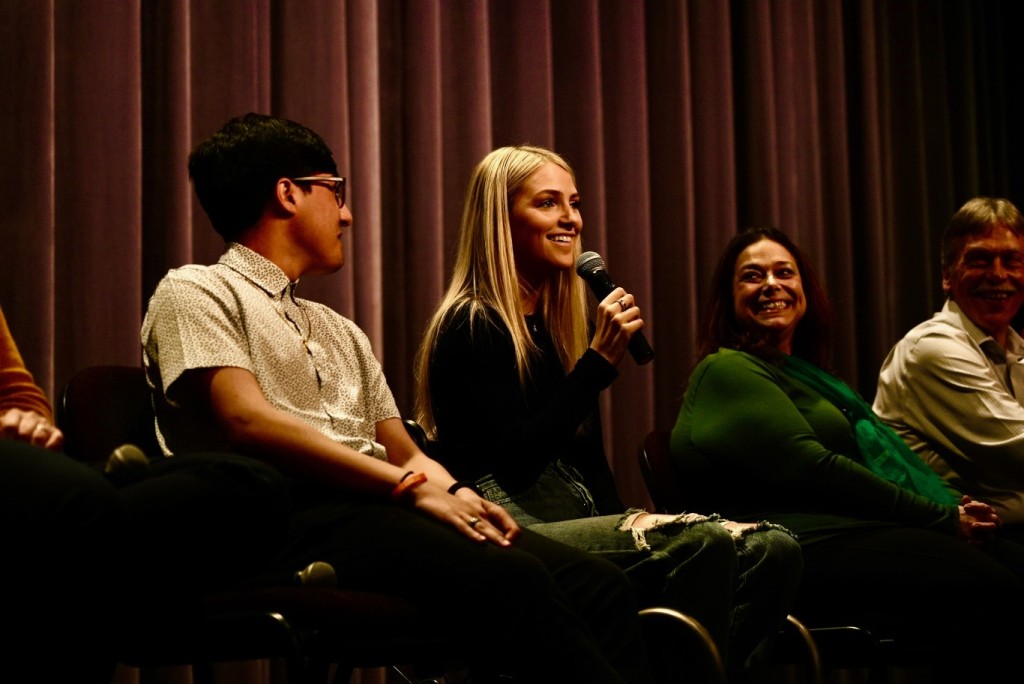
Over 150 My Ascension screening events have been held nationwide, inspiring and educating over 25,000 attendees. The My Ascension team interviewed hundreds of high school students who had attended a screening to determine the impact the film made on them. The vast majority of young people said that, as a result of the screening event, they:
- Had more empathy for people who experience mental health issues
- Would be better able to help a friend who is experiencing suicidal thoghts
- Were more likely to ask for help if they were struggling
- Have more hope for the future
Learn how to host a screening event in your school or community.
What Is Hidden Depression?
Hidden depression, also know as smiling depression or high-functioning depression, is a form of depression in which a person appears to be happy and even thriving on the outside, like Emma was before her suicide attempt—while suffering on the inside. A teen or young adult with smiling depression may get good grades, do lots of extracurricular activities, and have a large circle of friends, all while hiding their true feelings even from those who are closest to them.
This type of depression is especially dangerous because it’s more difficult to detect than other types of depression, so teens don’t get the support and treatment they need. In addition, people with smiling depression may be at higher risk of suicide. Because they’re accustomed to powering through the pain, they may have more energy and focus to make a suicide plan and follow through with the attempt.
Experts believe that smiling depression may actually be a condition known as major depressive disorder with atypical symptoms, formerly known as atypical depression. While the symptoms are essentially the same as those of major depression, what makes them “atypical” is that they are experienced internally and not expressed in any visible way. Another confusing element of major depressive disorder with atypical symptoms is that individuals with this diagnosis can experience a lift in mood in response to positive events, enhancing the façade that they are “doing fine.”
While there are no smiling depression statistics as such, researchers estimate that between 15 and 40 percent of people with depression experience atypical symptoms. Smiling depression can also resemble the manic phase of bipolar disorder, or what’s called “bipolar disorder with mixed features.” With this condition, depressive symptoms manifest as manic behavior and increased energy.
Hidden Depression and Suicide Risk
The biggest danger of smiling depression is that it will go unnoticed and therefore untreated. Because smiling depression doesn’t fit the stereotypes most people have about depression, family members and close friends often fail to notice what’s going on. Teens and young adults can seem cheerful, optimistic, successful, and high energy even while living with depression that may be quite severe.
Furthermore, while teens coping with depression often feel alone, smiling depression can leave teens even more isolated, because no one around them sees what they’re really going through. Without treatment, teens with this type of depression may have a higher likelihood of self-harm and death by suicide.
10 Warning Signs of Suicide in Young People
Statistics show that 20 young people die by suicide each day in the United States. Awareness of the signs of potential suicide risk can help save young people’s lives. Here are some of the warning signs that parents, teachers, school psychologists, and peers can look for, and which may manifest even if a teen or young adult is attempting to hide their depression:
- Aches, pains or digestive problems that cannot be explained by some other cause
- Fatigue or a lack of energy; sleeping too much or too little
- Changes in appetite and resulting weight gain or loss
- Irritability or intense sensitivity to rejection
- Difficulties with concentration or memory
- Talking or posting on social media about suicide or wanting to die
- Expressing feels of being hopeless or trapped
- Increasing use of drugs and/or alcohol
- Isolating themselves and withdrawing from friends
- Risk-taking or self-destructive behavior
If you see any of these signs, take the following actions:
- Do not leave the person alone.
- Remove anything that could be used in a suicide attempt, including firearms, alcohol, drugs, razors, or other sharp objects.
- Call the National Suicide Prevention Lifeline at 988.
- Take the person to an emergency room or seek help from a medical or mental health professional.

Preventing Youth Suicide Through Effective Treatment
Along with family and community support, the most important suicide prevention resource for teens and young adults is access to treatment for mental health and co-occurring disorders. The most effective treatment approaches utilize an evidence-based clinical model of care that focuses on healing the trauma at the root of depression, anxiety, suicidal ideation, and other mental health issues. In addition, young people gain skills in problem solving and conflict resolution, develop healthy coping mechanisms, and build executive functioning, resilience, and emotional self-regulation.
Contact our Admissions experts to learn more about how Newport Healthcare can serve as a resource for you, your family, or your clients. We are dedicated to doing our part in the suicide prevention movement by providing the highest-quality care for teens and young adults—so young people can have more and better days to spend with those they love.